Tuesday, May 09, 2017

Taking God Seriously: Vital Things We Need to Know, J. I. Packer #3

Packer2This is the third and final post looking at the book by J. I. Packer, Taking God Seriously: Vital Things We Need to Know.  In chapters 6-8 he discusses the Holy Spirit, Baptism and Communion.I am posting from my reading in New Testament theologies and devotionals on Monday, Wednesday and Friday. I welcome comments and discussion on my Facebook page. I am using the Logos version of the book.

In chapter 6, Taking the Holy Spirit Seriously, Packer looks at the person and ministry of the Holy Spirit, and urges the church to re-emphasize his role in it. He laments that institutionalism, formalism, moralism, and traditionalism (I would add bibliolatry which substitutes biblical knowledge and doctrinal precision as the main goal for the church, instead of that being the means by which the Spirit produces Christ-likeness in the individual and unified effective ministry in the church) have removed emphasis on the Spirit in many evangelical churches. Renewed emphasis on the Holy Spirit is absolutely critical, because he is the Divine Person who strengthens and empowers the church to be what Christ called it to be. He is God working inside us, renewing our hearts, causing faith to spring up, convicting us of sin leading to repentance, and connecting us to other believers. He maintains the unity that Christ has provided for the church. If we want to be what Christ has called us to be we must take the Holy Spirit seriously.

As we Christians are upheld by the Holy Spirit in the life that we live with God and for God, so was our Savior before us. As we live in a simultaneous relationship with the Father, the Son, and the Holy Spirit, who are always together and never apart from each other, so were the Father and the Spirit together with the Son when he was on earth, as they are still and always will be. 114

The Spirit, using the Word of God as both scalpel and exercise machine, straightens out our inner crookedness and energizes us for spiritual understanding, spiritual response to God, and spiritual, love-led, Christlike, God-honoring behavior as our lifestyle henceforth. 116

The unity of the church embraces all believers—Protestant, Roman Catholic, and Orthodox—while paid-up church adherents everywhere who lack personal faith in Christ are still outside the church as God discerns it, however zealous for their own denomination they may be. Packer, 122

Next, in chapter 7, Taking Baptism Seriously, Packer says that the average church member does not really understand the significance of baptism or value it the way we should. As one of the two rites commanded by Christ it is critical for the Christian life as the symbolic entrance into the relationship with Christ. It is a mystery (there is more to it than the mind can grasp), a sacrament (a pledge of loyalty from God and to God) and an ordinance (a covenant ceremony). It represents that we are now "under the new management" of the Trinity, "plugged into" Christ and all his benefits, and joined in unified discipleship to His church. Baptism is significant and should always remind us of our identity in Christ, our supernatural holiness through Christ and our loyalty to Christ.

The symbolism of first going under water as a sign of saying good-bye to the style of life one is renouncing and then coming up from under as a sign of starting a new life pattern is clearly expressed, and that evidently is what is important. The washing symbolism shows that this commitment is conceived within the frame of an absolution from the past that sets one free for the new beginning. The rite is thus one of termination, initiation, and commencement. J. I. Packer, Taking God Seriously, 128

Paul wants us to know what has happened to us through our faith-union with Christ: namely, that within our unchanged personal identity, the power that made the world has made us into new creations (2 Cor. 5:17), terminating our old, self-centered, naturally sinful mode of existence and, to borrow again Paul’s elegant horticultural image, grafting and implanting us into our risen Lord—plugging us into him, as we might less elegantly put it—with new desires, new powers, and new joys directly resulting. 138

Loyalty to Christ requires that we seek to make a difference by being different; and as in baptism the Father, the Son, and the Spirit pledge loyalty to us, so we the baptized must see ourselves as having pledged our loyalty to Christ categorically, without any ifs or buts, and as committed here and now to live out that loyalty every day of our lives. 144

In chapter 8, Taking the Lord's Supper Seriously, Packer accuses the Western evangelical church of devaluing the ordinance/sacrament of the communion/Eucharist. He says it should be the "twin" in the worship service with preaching and should be observed every Sunday. It is a symbolic ritual where we remember what Christ's death and resurrection accomplished for us and a covenant ceremony in which we confess sin, express our faith and publically pledge our loyalty to Him. God engages with us as we approach Him at the communion table. The communion table is also a place where we commit to help our needy brothers and sisters in the Body of Christ.

The words instituting the sacrament have shown us that remembering our Lord should mean both calling to mind his sacrificial death for us and embracing his covenantal commitment to us. And the act of actually taking the food and drink as from him should express the renewal of our trust in him and our ongoing dependence on him as our Savior, Master, discipler, friend, and our life itself. 154–155

So as we share in the Supper, we should be asking ourselves, and asking the Lord Jesus to show us, what human needs we should devote ourselves to serving once our Eucharistic service is over and we have scattered back into the wider world. 157

It is the presence of the triumphant, sovereign Savior, who is there in terms of his objective omnipresence and here in terms of being always alongside each believer with a sustaining and nurturing purpose. Clarity requires us to say, then, that Christ is present at, rather than in, the Supper. Though not physical, his presence is personal and real in the sense of being a relational fact. Christ is present, not in the elements in any sense, but with his worshippers; and his presence is effected, not by the quasi-magic of ritual correctly performed by a permitted person, but by the power of the Holy Spirit, who indwells believers’ hearts to mediate Christ’s reality to them. 161–162

Saturday, May 06, 2017

Reading Through the Proverbs #2 (Chapters 10-21)

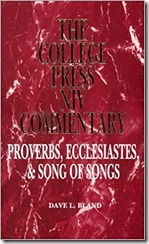
ProberbsWe continue through the Book of Proverbs, accompanied by the Proverbs, Ecclesiastes & Song of Songs, The College Press NIV Commentary, by Dave Bland. The middle section of the book of Proverbs is a collection of the “proverbs of Solomon.” I have been posting quotes from the book on my Facebook page on Tuesday, Thursday and Saturday (NT is Mon-Wed-Fri) and we can discuss comments and questions about the passage there. As usual my comments are in black and quotes from the commentary are in blue below…

Chapters 10-15 begin the Proverbs of Solomon. These chapters mainly focus on the differences between the righteous, wise lifestyle and the wicked lifestyle by means of antithetic parallelism. When one thinks, speaks, acts righteously one develops good character which generally leads to success. Wickedness, deception, manipulation and other acts that proceed from sinful character generally lead to disaster. The wise life is worth living.

These proverbs emphasize that the choice one makes has far reaching consequences. There is an intrinsic order to the way in which the universe runs. Actions have consequences. For the wicked, there is poetic justice; the punishment fits the crime. In contrast, the lives of the righteous stand secure. This is the “elementary” teaching of wisdom. Proverbs 10, 117

In Proverbs, pride is the fundamental sin of the fool. Humility is the fundamental virtue of the wise. These proverbs speak of the results of living a righteous life. According to verse 3, the internal character of the upright governs their life (cf. 6:22–23). Character is viewed not as a single act, but as a habit. Proverbs 11, 119.

The righteous are individuals who treat all of God’s creation with care. In contrast, the wicked make it a practice to exploit others. The proverb in verse 11 highlights an essential quality of the wise person, and that is discipline. The wise one exercises diligence in all that he does. He is not fickle, pursuing worthless dreams. Proverbs 12, 127

With emphasis on diligence and discipline, the sage is cautious about anyone who gains wealth quickly. This is the basis of verse 11. Get rich quick schemes usually involve fraud. On the other hand, wealth that is slowly acquired will last. Proverbs 13.11,  132

The majority of antithetic sayings in these chapters express a simple belief: God rewards those who choose the right path, but he punishes those who deliberately choose another way. Choices in life are clear and simple. The sages seem to oversimplify life. Yet in the midst of what appears to be a dogmatic perspective, the sages themselves acknowledge their limitation (v. 12). Anyone can be misled by what appears to be the right path. Humans cannot always know what is appropriate. Proverbs 14.12, 137

Wisdom expresses its fundamental character in saying and doing the right thing at the right time (cf. 16:24; 18:13; 25:11, 15; 24:26). Proverbs 15, 148

With Proverbs chapter 16 we move into a different style of Proverbs. 10-15 has given us the basics with antithetic proverbs contrasting good and evil. The next few chapters tend more toward synonymous parallelism and "better than" sayings. These bring out the ambiguous nature of life and the need for wisdom in navigating life in a world where corrupt officials or unexpected events may negate the good rewards that come from wisdom. One emphasis is that good character, wisdom and righteousness are their own reward, and a better reward than wealth, honor or power.

Typically humans plan and then work the plan. However, here the process is inverted. Humans work, but their plans fail unless God establishes them...The proverb is not a formula for unfailing success but only a reminder that success does not ultimately lie in human hands. Proverbs 16.3, 153

Quarreling is a major enemy of the community. Like water, it erodes the foundations upon which relationships exist. It undercuts the mutual respect necessary to hold a people together. Proverbs 17.14, 164

Gossip is compared to junk food. It is quite tasty. Nonetheless when absorbed into the blood stream, it remains a permanent part of the person. Once absorbed, it destroys character. Proverbs 18.8, 169

When internal desires and external actions are not informed by reflective thought (wisdom), they will not achieve their goals. This is a fitting proverb for an anti-intellectual climate, which sometimes exists in the church (cf. also 17:16). Proverbs 19.2, 174

Wisdom is realistic about human nature. On the one hand, it sees humans with great potential accomplish much through wise planning and implementing. On the other hand, wisdom sees every human involved in sin. No one escapes its clutches. Proverbs 20.9, 182–183

Life is more ambiguous than at first glance. The righteous do not always prosper. This proverb pair acknowledges human limitation and calls on the wise to accept such limitations. Such is the nature of true wisdom...The proverb concludes, in the second line, with the element of surprise. A third party enters the picture, Yahweh. He is the one who really determines the result. Proverbs 21.30-31, 196–197

Friday, May 05, 2017

PIU Graduation 2017

18195036_1940445016192664_8148320379713017852_n

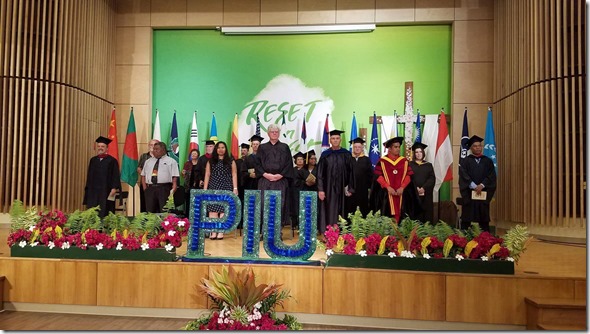
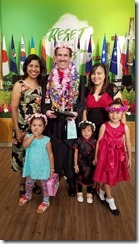
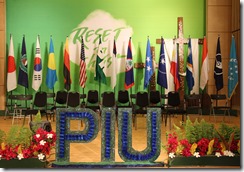
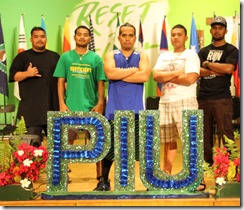
18157407_1320156814705036_6753639926118029857_nHere are a few pictures from the Pacific Islands University graduation last Saturday. I have to be honest, it was hard to look at these pictures because we were not there. This is the first-ever PIU Guam graduation has ever taken place without Joyce and I there. Looking at the pictures made us miss the place so much, especially our colleagues and the students that it was actually hard to post this. But I took some pictures from students Facebook pages and some pictures that were sent to me and present them here. We are so proud of the students’ accomplishment and thankful to God for what He has done in their lives. I look forward to seeing what these grads do next. Congratulations to the Pacific Islands University graduates 2017.

received_10211334676394064

The faculty and board wait for the graduates to march in

18156994_1511388312236018_7911138712494010915_nreceived_1021133470987490118199110_1511388572235992_3596146959563106931_n18199468_1511388362236013_5269864941043579377_n

Left: Trans-world Radio missionary Mike Sabin receives his Master of Arts in Religion degree; Right: Mayson Red and Liann Stae receive their Bachelor degrees

IMG_0976IMG_097920170429_142922

The venue looked great. I heard things went well. Good job guys!

Thursday, May 04, 2017

Brief Update on my Medical Testing

18260709_10211909237659859_65548721_oThank you to those of you prayed for me for my kidney test yesterday. The test did not take place because the doctor wanted to wait until after my PET scan so that he would know for sure that my lymph nodes are shrinking. The test was rescheduled for May 17th. I was a little disappointed, but it makes sense. And since the theme for this thing seems to be “be patient and wait,” it fits right in. So here is what I'm looking at over the next couple weeks. Tomorrow I have my blood draw to determine if I'm ready for chemo on Monday. Last week my numbers were above the minimum requirements, so the doctor is confident that I'll be okay tomorrow, but go ahead and pray for that anyway. Then Monday I will have my fourth round of chemotherapy. I appreciate you praying that my side effects will be minimal, especially that my edema would not get out of control again like it did after the third round of chemotherapy. Gaining and losing 15 pounds of water weight over a period of week is not good for my body.

So after the chemotherapy I will have my week of Prednisone and recovering from the chemo. The last day of Prednisone is Friday the 12th and that is also the day we will head down to Stanford for the PET Scan. We get the PET Scan Friday afternoon and then the doctor will see us and explain everything to us the next Monday. In the meantime, we plan to spend the in-between Saturday and Sunday in Scotts Valley and, if all goes well with health and edema, to go to Gateway Church on Sunday morning. It would be a minor miracle if I'm able to do that. But I would love to see people in Scotts Valley area either way. We'll head back up to Stanford on Monday, and then back up to El Dorado late Monday afternoon. This is going to be a lot more “out and about” than I've done since February so I appreciate your prayers for that too.

Figure you're tired of seeing pictures of me. So I thought I'd post a picture of my oldest granddaughter in her rugby uniform. Go get ‘em Courage.

Wednesday, May 03, 2017

Reading Through the Proverbs #1 (Chapters 1-9)

ProberbsNow we move on to another wisdom book, the Book of Proverbs, accompanied by the Proverbs, Ecclesiastes & Song of Songs, The College Press NIV Commentary, by Dave Bland. Proverbs is probably the only book of the Bible that can be read “verse-by-verse,” but even here the sayings are organized and grouped so that context is still important. I am posting quotes from the book on my Facebook page on Tuesday, Thursday and Saturday (NT is Mon-Wed-Fri) and we can discuss comments and questions about the passage there. As usual, quotes from the commentary are in blue below…

Wisdom literature provides instruction about how a person can live life skillfully in this confusing world. It provides general principles for living successfully within God's creation. Proverbs focuses on the way things usually work, while Job and Ecclesiastes focus more on the exceptions. In general wise people do what is appropriate because they have trained their minds through observation, advice and paying close attention to what is going on around them. They have a balanced view of life and know how to discern and take the best from the cultures around them. This is all based on a God-centered focus on life.

In the Wisdom Literature of Proverbs and Ecclesiastes the term wisdom refers to developing the expertise to negotiate the complexities of life. Wisdom occupies itself with discovering God’s order in life and then learning to fit into that order successfully, all the while keeping in mind the boundaries and limits of humanity. 29

Proverbs 1-9 is a series of 15 instructional poems from parents to a son. In 5 of the poems wisdom is personified as a woman. The parents warn of the three great dangers to a wise successful life that their child will face: greed for money, peer pressure, and sexual temptation. A bad decision here could ruin a young person for the rest of their life or, at the least, cause unnecessary problems.

The wisdom poems serve as powerful metaphors of two lifestyles: wisdom and life on the one hand, folly and death on the other. These contrasting metaphors depict the moral boundaries or limits in which humans are to operate. To venture outside the boundaries is folly and death. To stay within the bounds is wisdom and life. Proverbs 1-9, 50

The first chapter introduces the good and bad influences, with the good ones framing the bad one. The introduction (1-9) urges the youth to listen to godly parents who will instruct them in the "fear of the LORD." The last section of the chapter (20-33) urges the youth to live a life seeking wisdom because she will save them from a world of trouble. In between, the youth is warned about the peer pressure of the "gang" that promises easy money, fun and companionship, but really leads only to self-destruction.

In the book of Proverbs, the fear of the LORD does not primarily refer to the reverent worship of Yahweh. The subject of worship is seldom addressed in the book. Rather it refers to the total life commitment of a person to God...This text defines the fear of God as the dedication of one’s whole life to the devotion of the LORD. It is not simply the display of awe and reverence in public worship. Instead, it is the demonstration of daily response to God’s will in one’s decisions and actions. Proverbs 1.1-7, 54

The parents exhort the son to stay away from the gang for two reasons. For one, their actions are evil (v. 16). For another, their vision is shortsighted (vv. 17–19). They only desire instant gratification. However, the primary basis upon which the father appeals to the son is not on rational arguments but on the basis of the father’s credibility with the son. The father describes the enticement of the gang’s lifestyle and responds by saying, my son do not go along with them (v. 15). It is an appeal to the relationship the father has with the son. Proverbs 1.9-19, 59

In 1:20–33, Wisdom assumes the role of a teacher. She is concerned with a class of students who lack motivation. She has lost patience with her inattentive students (1:24–27). She pulls out all stops to convince them of the seriousness of the subject matter. Her instruction deals with matters of life and death. Proverbs 1:20–33, 63

Chapter 2 is an acrostic poem urging the student to work hard and patiently to acquire wisdom. It is not easy to get, but the benefits of the hard work are worth it. Wisdom leads to godly character which will protect students from the destruction evil brings and make them productive members of the community. Chapter 3 urges the young to honor YHWH by trusting Him above all, listening to godly parents, submitting one's possessions to God and accepting His discipline. Wisdom is pictured as a faithful wife who brings blessing and wealth to her husband (13-20). The chapter closes with a description of how the wise person behaves in community (21-35) and the blessings this provides.

As youths begin to seek wisdom, they will find the pursuit wearisome. Wisdom is a quality that humans do not necessarily have a natural inclination to possess. They must acquire a taste for it. If youths can work through the initial struggles and maintain openness and patience, they will find it. Proverbs 2.1-11, 65

Fundamental to the goal of education is instilling in the heart of the student an intense desire to learn. Wisdom involves more than understanding; it includes an attitude...The primary focus of this instruction is on the formation of godly character. This concern for character focuses on internal qualities, which in turn manifest themselves in the way in which the learner activates righteousness, justice, and fairness in the community. Proverbs 2, 67

To trust in the LORD with all your heart refers to the total surrender of self. The admonition is the theological foundation upon which all the proverbs rest...When the disciple learns to trust completely in Yahweh, then the promise is that he will make straight your paths. This does not mean that Yahweh promises a life free from difficulties. Rather it means that one’s life has clear direction and purpose. Proverbs 3.5-6, 70

Chapter 4 continues the instruction from father to son with three more speeches. He urges his son to make the sacrifices necessary to gain wisdom (1-9). This will keep him away from the wrong life path of the wicked and on the right one (10-19). The student must discipline his body to make the right and wise choice. Wisdom is gained by self-denial, discipline and, sometimes, suffering. Chapter 5 is a warning to avoid the adulteress. There is nothing that can destroy a young person's life as quickly and as thoroughly as bad decisions in relationships. But a good marriage relationship is a tremendous blessing and a major factor in a successful life.

The disciple is to exert every ounce of “body” strength to the task of staying on the right path. When each part of the body is properly functioning, the whole body is morally healthy. In addition, when every part of a person’s body is under control, he or she incarnates the principles of wisdom. Proverbs 4, 79

The wife is also a source of protection from the adulteress. The best way for the husband to resist sexual temptation is to have a loving relationship with his wife. Proverbs 5, 84

In chapters 6-7 the sage offers practical advice about how to live life successfully and wisely. He advises the young man to avoid several pitfalls including offering collateral for the loans of others, laziness, being a "scoundrel" who lives by deception and violence, and adultery. Chapter 7 pictures the adulterous woman as a huntress who kills the soul of the young man.

The ant, which has no overseer or ruler, is self-motivated (v. 7). She acts autonomously, without the need for supervision or direction from others. She manifests self-discipline, an important quality in sapiential wisdom. She fulfills her responsibilities because she sees the larger picture of life (v. 8). The point is, if the little does this, then how much more should humans take the initiative to fulfill responsibilities? Proverbs 6.6-11, 88

Adultery is representative of how sin destroys human relationships. It also symbolizes living outside the boundaries of wisdom. Because of the enticing and destructive consequences of adolescent lust, the sage uses powerful rhetorical images and even scare tactics to discourage youth from acting out their sexual drives in adultery. Proverbs 6.20-35, 91

Many have been the victims of the adulteress. To follow in her steps leads the youth to an early grave. This instruction calls on youth to be constantly alert to temptation. The adulteress is ever present, lurking at every corner (vv. 11–12). No man can avoid her. For youth to resist her requires constant vigilance. Proverbs 7, 97

In 8-9 wisdom is personified calling out to the young man and inviting him to pursue the wise life. This is contrasted with "woman folly" who invites the young man to cast off all restraint and be "free." The way of folly is the way of death while the way of wisdom provides life, real joy and a stable, happy life.

Wisdom’s father is God; he raised and trained her (v. 30). So her instruction is trustworthy. Whoever finds me finds life and receives favor from the LORD (v. 35). Wisdom is described not simply as an intellectual component but as an attitude, a desire. Wisdom’s function is to generate a passion for doing good and for building a wall of protection from temptation. Proverbs 8, 102

The bottom line is that wisdom grows only in the context of a relationship with God (v. 10; cf. 1:7). True education begins with the affirmation of God’s active work in the daily affairs of life. Proverbs 9.7-12, Bland, 104

The two women depicted in chapter 9 represent the two choices set before youth: life and death. If one chooses the banquet of Wisdom, then one follows the path of learning and growing and moral development. It is a nutritious meal that leads to a healthy life. If one chooses Folly’s banquet then one has chosen a feast that by all appearances looks good. However, it is a meal loaded with sweets and containing little nutrition. In fact, the meal is toxic. Proverbs 9, 105

Tuesday, May 02, 2017

Prayer Request, Visitors, and Another Brief Medical Update

20170429_105245 (1024x768)Not too much has changed since my last Medical Update. The edema still seems to be slowly decreasing but still bothers me quite a bit. Right now I'm in the week three rest period with few doctor appointments and no shots. I do have two medical appointments this week. Friday I will be getting my pre-chemo blood draw. The doctor is anticipating no problems there because my numbers have been up. But I would like special prayer for my doctor's appointment tomorrow. I will be seeing the urologist to take a look at how my right kidney is doing. He will be doing some tests to determine if my right kidney is still compromised/blocked. If it is not, they may take the kidney bag off and see if my urinary system is fully functional. The other tubes inside me would come off later if all goes well. I’d sure like to get that bag off. My prayer is that the the test tomorrow will go well and I'll be able to get the bag off. Thank you so much for praying for this and for my blood test on Friday.

Last Saturday we had two special visitors come by. Two old friends, Louis Mann and Harry Olsen. Louis was my history teacher in high school and then my principal when I first became a a teacher myself. He was also involved with the youth group of my church when I was in the high school and college group. I have not seen him since the Baymonte Christian School reunion in 2014. Harry was the associate pastor at my church in Scotts Valley when Joyce and I first got married. He and his wife Carol helped Joyce and I quite a bit through our first year of marriage. I hope I don't have to go 30-plus years without seeing him again. Both of these guys had tremendous influence on my life and are important reasons why I'm in ministry today. It was really good to see both of them. I especially appreciated that they prayed over me for healing and anointed me with oil before they left. Both of them are now involved in training church planters so I also enjoyed sharing ministry stories and teaching ideas with them. Thank you Louis and Harry for dropping by.

Monday, May 01, 2017

Taking God Seriously: Vital Things We Need to Know, J. I. Packer #2

Packer2This is the second post looking at the book by J. I. Packer, Taking God Seriously: Vital Things We Need to Know.  In chapters 3-5 he urges us to “take seriously Christian unity, repentance, and the church.I am posting from my reading in New Testament theologies and devotionals on Monday, Wednesday and Friday. I welcome comments and discussion on my Facebook page. I am using the Logos version of the book.

In chapter 3 Packer urges us to take "Christian Unity Seriously." The unity he is talking about is not ecclesiastical, but it is a unity built on the truth of scripture and the shared indwelling of Christ through the Spirit. It is the one faith, one hope, one baptism, one body expression of the church. The universal church is made up of many local bodies who all share the same LORD and thus the same mission. This should be expressed in shared ministry, mutual help, inter-church fellowship and an open communion table. We do not compromise the truth for unity, but we do recognize that no Christian denomination has the truth perfectly, and we listen to one another. Jesus said the mark of the church is unity expressed through love. We do need to take this more seriously.

This, then, is the Christian unity—unity, that is, of Christians—for which Jesus prayed: a common loyalty to him first and foremost, expressed in clearheaded adherence to his teaching, wholehearted appreciation of his gift of eternal life, holy love as a style of living, and a primary commitment to the missional task of spreading the gospel worldwide. 55

Christian love is unconditional in the sense of accepting, respecting, and showing goodwill to people just as they are, but it is not unconcerned or undiscerning about being beneficent as distinct from merely indulgent. True Christian love holds to Christian standards all the way. 63

Christian unity starts with the authority of Scripture and the truth about Jesus Christ, as the Bible teaches it and as the Patristic creeds and Reformation confessions, echoing Scripture, define it; that the reimagining of God and the gospel by today’s revisionists shatters that unity; and that only a reembracing of biblical doctrine as transcultural truth and of biblical behavior standards as abidingly authoritative will restore it. 67

In chapter 4, Taking Repentance Seriously, Packer decries the lack of emphasis on repentance in the modern church. We have deemphasized sin and holiness in our preaching and teaching and thus, see no urgent need for personal and corporate repentance. He urges that we get back into the internal battle with sin with regular, personal, Spirit-led self-examination and specific, daily repentance. He sees Jesus speaking through Revelation 2-3 to the modern church to turn away from its acquiescence to the standards of the pagan world and really follow and imitate Christ as we meet Him in the Gospels.

Repentance, in the broadest sense, signifies that change of mind, purpose, attitude, and behavior whereby we embrace God’s agenda of mercy toward us and turn back from the old life of fighting God by playing God to live the new life of humbly and thankfully serving him. Repentance is thus a whole-person business in which a pattern of self-centered self-service is replaced by a God-centered habit of seeking others’ welfare, and pride and willfulness give way to prayer and worship. 74

Countermeasures must take the form of thought, prayer, meditating on the Scriptures, keeping close and becoming transparent to fellow-believers, and making a point of repenting—formally, frankly, and fully, in an explicit transaction with God—the moment we realize that we have in any way gone wrong. 79

So begin your repenting with your mind, practice intellectual repentance for uncritically accepting fashionable intellectual folly, confess the mental mistakes that you picked up from the pagan world around you and forsake them; and follow me into renewed faithfulness to the true truth of God. 85

In chapter 5, Taking the Church Seriously, Packer sees the church as a gift of God's grace in which God saves individuals and binds them together into a unified whole. This is pictured as a temple (the dwelling place of God, in the people, not a building), the body of Christ (a diverse, but unified, entity that carries out the mission of Jesus) and the bride (the object of Jesus' love and care). It is one (unified), holy (consecrated to worship in word and action), catholic (has a global presence and mission), and apostolic (holds to the foundation of the apostle's teaching). It is a global entity with local outposts.

When we become Christians, we are not alone and must never think of ourselves as being alone. We are saved individually, one by one, but not for a life of solitary and still self-centered individualism. None of us is the only pebble on God’s beach! On the contrary, we have been brought into a new solidarity: that of being, first, adopted children in the Father’s family and, then, linked units in God’s new creation through union with the risen Christ by the Holy Spirit. This new creation is the reality that is called the church. 89

The local church is called to be a miniature presentation of what the universal church is called to be. It is to be an outcrop, microcosm, sample, and specimen of the larger reality. It must see itself that way and act accordingly. Each local congregation must understand itself as a subset of the one global fellowship, a small-scale embodiment of that fellowship’s life for all to see. 93

The local church is a group of believers who band together to meet on a regular basis and do all the things that, according to the New Testament, the church does—praise and pray together, maintain ministry of the Word and sacraments, practice pastoral care and pastoral discipline toward each other, give and help where there is need, and reach out with the gospel to the neighborhood and beyond. Packer, 93–94