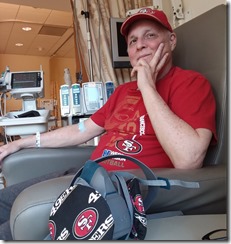
Tuesday, December 12, 2017

Reading Through the Gospel of Mark #5 (Chapters 14-16)

MarkThis post concludes my reading through the Gospel of Mark accompanied by Mark, The NIV Application Commentary, by David E. Garland. In chapters 14-16, Mark completes his discussion of the Passion week of Jesus with a discussion of the arrest, trials, crucifixion and a very brief account of the resurrection. I am posting from my reading in the New Testament accompanied by various commentaries on Monday, Wednesday and Friday and welcome comments and discussion on my Facebook page. I am using the Logos version of the book. As usual my comments are in black and quotes from the book are in blue.

Mark 14 begins with a woman's act of devotion, the anointing of Jesus, sandwiched between two dastardly acts of betrayal of Jesus by the Jewish leadership and by Judas Iscariot. Probably both thought they were serving God, but the betrayers had mistaken their own personal agendas for God’s. The woman, possibly, had listened to Jesus and was one of the few people who understood what we has doing and thus prepared his body for burial. At the very least it was an act of supreme devotion to Jesus which was what God was really looking for. The next section records the preparation and eating of Jesus' Last Supper. Mark is clear that Jesus is fully aware of what is about to happen and the coming significance of the events, though the disciples seem to have no idea. He warns them that there is a betrayer in their midst and that they all will deny Him, but they refuse to believe Him. God's kingdom will not come about by human bravery, but by lives changed through Jesus' death and resurrection. This is what is symbolized in the recurring remembrance of the Lord's Supper. It is the ceremony of a new relationship with the risen Christ, a pledge of our allegiance to the New Covenant begun made possible by Jesus' broken body and blood, and commitment to one another as God's kingdom family. Each of us need to regularly examine ourselves to make sure we are not acting as Judas, who takes the elements while planning to betray Jesus, or as the disciples who think they can serve Jesus in their own power and with their own agendas.

The woman had no idea of the worldwide significance of her action, nor did the high priests, Judas, or Pontius Pilate. Albert Einstein said, “It is a tragic mistake for those in power to think that they are in control.” It is also a mistake for us to think that our sacrificial devotion is wasteful or insignificant. Who knows how God will use it? Mark 14.1-11, 521

Jesus’ sacrificial death is also a covenant-making event. It marks a new act of redemption and begins a new relationship between God and the people—one that supersedes the old. It creates a new community gathered around his table. Mark 14.12-31, 529

The Lord’s Supper works for good. It reminds us who we are, what our story is, what our values are, and who claims us as his own. In the Lord’s Supper, the gospel confronts all five of our physical senses. We see, hear, taste, smell, and touch what it meant for Christ to die for us. It also binds the past, present, and future together. We look back to Jesus’ Last Supper and experience the beginning of the new covenant with God. We experience Jesus’ death for us and the power of our sins being forgiven in the present. We look forward to the future celebration in God’s kingdom, when all will acknowledge Jesus as Lord. Mark 14.12-31, 534

The rest of Mark 14 records Jesus' prayer in Gethsemane, the arrest of Jesus, His abandonment by His disciples and the trial before the Sanhedrin. Mark portrays Jesus in agony, knowing and waiting for what he is about to experience. He goes to the Father in prayer asking if there is any other way but trusts the Father's plan and becomes the example of how we are to handle suffering. The disciples, on the other hand, fail to realize the crisis they are in and immediately abandon Jesus when the mob comes to arrest Him. The Sanhedrin, not all the Jewish people, are seen in Mark as the guilty party for arresting Jesus and turning Him over to the Romans. The issue is that Jesus combines several OT prophecies and raises the idea of a human Son of David to a human/divine Son of Man. He is then convicted of blasphemy. Peter's denial heightens the abandonment of Jesus. The only encouraging thing here is that Mark's readers would have known that Peter was forgiven and restored. This whole scene goes exactly as Jesus predicted.

Prayers asking God to have a change of mind are not considered insubordinate but actually exude trust that God listens to prayer and grants requests that can be reconciled “with overall Providence.” Mark 14.32-52, 540

In Mark, we see the Son of Man associated with power that is blended with suffering and weakness. Jesus openly declares that he is the Messiah only when there is no possibility that crowds will rise up to crown him king. His admission seals the case against him and ensures that he will die. If Jesus is the Son of Man who will sit on the right hand of Power and come in the clouds of heaven, one must completely rethink what one believes about the Messiah and about power. Jesus as the Messiah is far less than many people hoped, because he never raises a finger against anyone and passively submits to death. As the Messiah, he is far more than anyone hoped, because he divinely exercises the power of God. Mark 14.53-65, 569

Peter was the most prominent of Jesus’ disciples, yet he was still a sinner in need of God’s mercy. He thought he would die for Jesus, but he needed Jesus to die for him...If Peter could be restored after denying his Lord and even cursing him, then there was hope for others who might be guilty of the same or worse. Peter’s tears of remorse mark the beginning of that restoration. Mark 14.53-72, 574

Chapter 15 of Mark describes the trial before Pilate and crucifixion of Jesus. Pilate's indifference to justice and desire to preserve order and his position, at all costs assure this miscarriage of justice. Garland sees the people's choice of Barabbas over Jesus as an example of the human way to choose violence to gain personal power over God's ways. Mark emphasizes the mockery of all classes of people at the crucifixion. Ironically, what was intended as mockery is shown to be true. Jesus was a real king and God did deliver Him from death through the resurrection. Mark also emphasizes Jesus’ cry from Psalm 22 and he pictures the crucifixion with reference to the entire psalm, emphasizing that Jesus was the "righteous sufferer" who felt and seemed abandoned by God but was never abandoned and would be vindicated. That vindication began with the tearing of the temple veil from top to bottom and the confession of the centurion. The old order was done. God's presence and power were about to break out of the temple and go out to all the world.

God’s way responds to evil redemptively and short-circuits it. On the cross, Jesus took the sting of death and absorbed all the poison. Our failure to choose this way stems from our failure to trust God. We may trust God to take care of the afterlife, but we do not trust God enough to let go of too much control of the here and now. If we have to suffer, we would rather put our trust in the Barabbases of this world, who fight back and murder enemies. We have yet to see that this way only leads to more death and tragedy. David E. Garland, Mark 15.1-20, 583

Jesus is a king who died an outlaw’s death. Jesus is the Messiah, who was rejected by the people he came to deliver. Jesus is the mighty Son of God, who did not use his power for himself but died a seemingly powerless death. All traditional symbols have been reversed. Weakness is a sign of power. Death is the means to life. Godforsakenness leads to reconciliation with God. Mark 15.21-47, 598

Jesus prayed the prayer of the righteous sufferer, who trusts fully in God’s protection. Psalm 22 naturally came to mind because he was mocked (Ps. 22:7–9), his strength was dried up (22:15–16), his hands and feet were pierced (22:16), and his garments were divided (22:18). Jesus therefore did not simply let out an anguished wail of pain but deliberately quoted this lament, which moves from an expression of pain to confidence in God’s deliverance. Why would Jesus cry out to an absent God unless he believed that God was indeed there to hear and able to deliver him? Mark 15.34-37, 601

Mark ends his record of the Passion the same way he started it; with a report of the devotion of the women who followed Jesus. The women come to the tomb wondering how they would roll away the stone and then, when they see it rolled away, they wonder how that happened. A "young man" explains that Jesus "is not here. He is risen." He instructs the women to tell the disciples and let them know that Jesus will see them in Galilee. The narrative ends with the report that the women remain silent and do not report as instructed. I would tend to agree with Garland that "Mark fully intended to end his Gospel with the startling disclosure that the women spoke to no one because they were afraid. If we want to understand Mark, we must grapple with this awkward conclusion no matter how unsatisfying it might be." (618) I think that Mark does this purposely to place the reader into the story. We know that eventually the women told the story, the 11 disciples believed and the gospel has gone out powerfully into most of the world. Now the question becomes what will we do with this command. Will we go meet Jesus and faithfully live as His people and tell the story of the gospel to all the world?

This command is the first time that Jesus’ followers are told to tell something about him. The crucifixion and the resurrection, therefore, mark a turning point. There is no need for silence or secrets now (see 9:9). As Marcus points out, “Whereas before those events Jesus commanded secrecy and open proclamation was disobedience, now Jesus commands open proclamation and secrecy is disobedience.” Mark 16.1-8, 614

“He is not here. See the place where they laid him.” There is no reunion with the familiar earthly form of Jesus, with tears of joy and hugs all around. Jesus cannot be held by death, let alone by a stone. He is free from death, transformed from this earthly existence and unleashed on the world. One cannot meet him at the place where they laid him. His grave is not to become a shrine like David’s tomb (Acts 2:29), the dressed-up tombs of the prophets (Matt. 23:29–31), or the tombs of modern-day leaders. The God who raises the dead has no use for earthly memorials. The tombstone is not to become a wailing wall. God is not the God of the dead, entombed in shrines, but of the living. Mark 16.1-8, 623

The gospel is about the power of God, which overcomes human dysfunction and disaster. We know that Jesus’ resurrection was proclaimed and is being proclaimed throughout the world, just as Jesus said it would. This means that God’s will and Jesus’ promise have been fulfilled despite human disobedience. Mark 16.1-8, 626


Monday, December 11, 2017

Getting a Christmas Tree(s)

25348361_10215476685458079_6047033349380875893_n

It has been a long time since Joyce and I were in a place where we could go out and cut down our own Christmas Tree. So yesterday Joyce, Missy and Leila felt the urge to go out into the forest (they got a forest service permit), made the trek and cut down a tree for our house. I could not go because I am still restricted to the house. Also, we cannot have a real tree in the house. So we have an artificial tree inside the house and they set up the real tree on the deck behind the house. Wow, this year we have two trees! Here are a few pictures of the day’s adventure.

425 (768x1024)426 (768x1024)24991407_10215476686938116_4213045853076391715_n

They found the perfect tree! If you look very closely at the picture on the right you can see Joyce behind Missy and the tree.

20171208_161957 (960x1280)20171208_185049 (1280x960)20171210_160633 (960x1280) 

On the right, the tree arrives at our house and is set up on the deck. On the left, the indoor, artificial tree is decorated. For some reason I think we are going all-out on Christmas this year!

Saturday, December 09, 2017

Reading Through Theology of the OT: by Walter Brueggemann #2

BrueggemannThis post continues my reading through Theology of the Old Testament: Testimony, Dispute, Advocacy, by Walter Brueggemann. Chapter 2 surveys how Old Testament is and should be done in the post-modern world. I appreciated his criticisms of the shortcomings of critical methodology and the unwillingness of more conservative approaches who place dogmatic theology above the text. I have been posting quotes from the book on my Facebook page on Tuesday, Thursday and Saturday (NT is Mon-Wed-Fri) and we can discuss comments and questions about the passage there. As usual my comments are in black and quotes from the theology are in blue below. I am using the Logos version of the book.…

Chapter 2 discusses how OT theology is and should be done in a post-modern world. He begins with how he thinks it should be done. First, the OT must be understood in its narrative framework: it is a story that reflects Israel's reception of the revelation of its God in its experience. Thus, it is what Israel says about its experience and how the writers interpret it that counts. Second, one must recognize the different voices within the text. For example the voices of order, wisdom and consolidation compete with the prophetic voices of liberation and change, without the issues, like theodicy, being resolved in the text. It is also important to see that the OT text as we have it is a product of the exile. That does not necessarily mean that the original texts are not older or are not historically accurate, but their final form is influenced by the exile. This also shows the importance of intertextuality. The OT was prone to reuse or refer to older texts to apply to new situations, so it is important that we be able to interpret it in terms of those connections. One must also read the New Testament being cognizant of its references to the OT. The OT is a Jewish book which means it must be read that way with its rich metaphor and seemingly contradictory dialog that must be thought through and yields several avenues of understanding.

We now recognize that there is no interest-free interpretation, no interpretation that is not in the service of some interest and in some sense advocacy...Such an interpretive enterprise is a profound departure from the older, long-established hegemonic work of interpretations in which one could enjoy “assured results.” In my judgment, however, faithful interpretation—that is, interpretation congruent with the text being interpreted, requires a willingness to stay engaged in such an adjudicating process and not to retreat to a separated interpretive community. 63

In Israel’s theological rhetoric, it is evident that Israel employed a rich strategy in order to find speech to match the continuing Character whom it rendered at the center of its life...we can see a complexity, oddity, and dangerousness about Yahweh, qualities that could hardly be taken into account by the conventions of positivistic history or by the modes of classical theology. Yahweh, it appears, is always prepared for some new, outrageous self-disclosure, depending on the courage and freedom of Israel’s boldest speakers. 71

The Old Testament in its theological articulation is characteristically dialectical and dialogical, and not transcendentalist...By this I mean that the God of Israel is characteristically “in the fray” and at risk in the ongoing life of Israel. Conversely the God of Israel is rarely permitted, in the rhetoric of Israel, to be safe and unvexed “above the fray.” Even where God is said to be elsewhere, this “elsewhere” is most often in response to Israel’s life, either negatively or positively. 83

Chapter 2 ends with a discussion of several approaches to doing Old Testament theology in the modern world. Brueggemann lays out several different approaches, both traditional/centrist and marginal/radical, to doing OT theology and discusses the work of several different academics doing work in the field. He insists that the church must listen to both the more traditional academics and the ones that are doing work on the margins, especially the non-Western interpreters. Both voices, maintenance of tradition and liberation and change, of the Old Testament must be heard. His conclusion emphasizes that we must be careful reading the OT under the authority of critical scholarship or church dogma. Both are important tools but have their limitations. Critical scholarship removes the supernatural which is the heart of the Bible's message while church dogmas tend to "tame" the Bible and remove the parts which cannot be fit into a particular systematic scheme. Again, we need to let the text be the text and read it, as much as we can, as it was intended. The church's task is always to take the text and apply its message to new situations as they arise.

Exposition is always conducted in the presence of two audiences. In the first instant, exposition is directed at the self-understanding, self-discernment, and authorization of the community that begins in assent to this text...the Old Testament is always addressing, belatedly, a second listening community: the larger public that is willing to host many alternative construals of reality. The long history of this text, especially in the West, attests to the endless points of impingement, whereby this text has provided the categories, the discernment, the energy, and the impetus for a different shape of life in the world. 87–88

While we do not know how to do it very well, one of the primary demands of Old Testament theology in our present context is to work precisely at the interface between these readings (centrist and marginal) in conflict. The conflict between these readings not only concerns interesting methodological questions and incidental interpretive issues, but cuts to the core theological claims of the text. 102

The work of biblical theology, vis-à-vis systematic theology, is one of tension that is honest but not quarrelsome. In practice, I suggest that it is the liturgy that is to enact the settled coherence of church faith, and the sermon that provides the “alien” witness of the text, which rubs against the liturgic coherence. There can, in my judgment, be no final resolution of the tension between the systemizing task of theology and the disruptive work of biblical interpretation. It is the ongoing interaction between the two that is the work of interpretation. 107

Reading Through the Gospel of Mark #4 (Chapters 11-13)

MarkThis post continues my reading through the Gospel of Mark accompanied by Mark, The NIV Application Commentary, by David E. Garland. In chapters 11-13 Mark begins his discussion of the Passion week of Jesus. Jesus now begins to reveal who He is to the public, but it is quite different than the disciples or the nation expect from their Messiah. I am posting from my reading in the New Testament accompanied by various commentaries on Monday, Wednesday and Friday and welcome comments and discussion on my Facebook page. I am using the Logos version of the book. As usual my comments are in black and quotes from the book are in blue.

Mark 11 begins with the first 3 days of the passion week of Jesus. On the first day Jesus introduces Himself as the Coming One and allows the people to acknowledge Him as the coming King. As King, He then comes to His temple and inspects it and then goes home quietly. On the next day, Jesus dramatically shows the result of this inspection in the cursing of the fig tree and the symbolic judgment on the temple. The fig tree shows that the temple will "dry up and wither" just as the fig tree was withered from its roots to the top. Jesus symbolically condemns the sacrificial system, the corruption of its leadership, and the perversion of its purpose away from God's design for it. The withering of the fig tree, and the quote from Jeremiah 7) showed that this judgment was a done deal. Jesus does not allow the religious leaders' arguments against his authority on the 3rd day to deter His mission of setting up the new order that God had promised.

Jesus enters the temple to inspect it, and the next day’s events reveal that he comes not to restore it but to pronounce God’s judgment on it. Mark 11.1-11, 429

These sayings, however, are integrally related to context. They reveal the essence of the new order that replaces the old. The new order is based on faith in God (11:22) that overcomes insurmountable odds (11:23), is sustained by grace (11:24), and is characterized by forgiveness (11:25). Mark 11.12-33, 441.

The temple system fostered xenophobia and ethnocentrism. The strain between Jew and Gentile, male and female, would never be settled (Gal. 3:28) as long as the temple stood with its series of holy barriers, each saying to a different group, “No entry!” Jesus calls for an end to the exclusivism that allows prayer and sacrifice for only a select group. Mark 11.12-33, 447

Mark 12 records a dialogue between Jesus and the religious leaders regarding who really spoke with God's authority. Jesus' begins with an allegory that identifies the Jewish leadership with those in the past who killed the prophets and are now about to make the mistake of killing God's Son and rejecting His kingdom. The leaders respond with trick questions and debate. Jesus handles each question in a way that demonstrates his own Divine authority and the corruption of the leadership. They had missed the point that devotion to God and taking care of His people is the most important thing. Thus, they did not see what God was doing in their time and they rejected His Messiah, missed His kingdom and would soon be subject to judgment. We all must keep close account on our devotion to God so we do not miss what He is doing around us now.

This allegory does more than condemn evil leaders who lived some two thousand years ago; it applies to us. The story of God’s relationship with a disobedient and rebellious people has not changed much. The judgment that fell on them can fall on us if we, as leaders, fail in our stewardship. We must therefore analyze in what areas we have failed to yield fruit to God, how we may have rejected and mistreated God’s servants (3 John 9–10), and how we continue to reject God’s Son (Heb. 6:6). Mark 12.1-2, 458

God is Caesar’s Lord. One may owe Caesar what bears his image and name—money. One owes God what bears God’s image and name. Since we are created in the image of God (see Gen. 1:26; Prov. 7:3; Isa. 44:5; Jer. 38:33; cf. Ezek. 18:4) and bear his name as children of God, we owe him our whole selves. Exactly what we owe God becomes clear in Jesus’ answer to a certain teacher of the law: We owe God love from all our heart, soul, mind, and strength (12:30, 33). Mark 12.13-17, 463

Jesus’ response to the Sadducees’ challenge helps us see what to emphasize and what to ignore. He rejects the Sadducees’ mistaken earthly images of resurrection life and seizes on an individual’s relationship to God. We should avoid attempts to describe what heavenly life is like. Instead, we should highlight the necessity of a close tie to the heavenly Father, who keeps his promises. Mark 12.18-27, 472–473

She throws away her living for the sake of the temple. The temple overlords will throw away Jesus’ life to preserve their power base. The new community centered around Jesus places a priority on people rather than cultic rituals and grand edifices that are subject to destruction. What is important is the demonstration of humble faith, sacrificial devotion to God, and care for the poor and needy (1 Tim. 5:16; James 1:27). Mark 12.28-44, 483

Mark 13 records Jesus' response to the disciples' question about the timing of the destruction of the temple and the end of the age. According to Garland, though the disciples expected that these two events were simultaneous, Jesus separates them (5-23 temple, 24-27 end of the age) and does not give a timetable. Instead He urges them to "watch," be ready for persecution and suffering, and accomplish their mission to preach the gospel to all nations. The first part of the speech deals with the destruction of the temple fulfilled in 70AD. Jesus tells them to watch out for false prophets and that the destruction of the temple is coming soon (this generation) and is unavoidable. Garland sees no signs given for the end of the age. It will happen whenever the Father determines. Our job is to make sure we are being faithful to the mission, not to speculate about dates and times. I think Garland is basically right here, although I would see some typological (not one to one) connections between the AD70 event and the 2nd coming. The bottom line is that the best way to be ready for Jesus to come is to be steadfast under persecution and suffering and to fulfill the part we are to play in God's Kingdom mission.

What has been implicit in Jesus’ actions in the temple now becomes explicit. He openly prophecies its complete destruction. The temple belongs to an old order, whose builders will reject the stone that will become central to God’s new temple. This temple has become obsolete, and God will allow it to be utterly destroyed. Mark 13.1-24, 491

Jesus’ predictions about the temple’s destruction will come true. Those things that humans may believe are the center of the universe may disappear from the face of the earth. Only Jesus’ words abide. They are “the firm ground upon which the church can dare to live and to meet courageously all the terrors which are coming before the end.” Mark 13.25-37, 502

When the Son of Man comes, he will not quiz people to see whose predictions on the date were accurate. He will want to know what we were doing. Were we proclaiming the gospel to all the nations? Were we enduring suffering faithfully? Were we fulfilling the assigned tasks? Those who have been asleep on the job or buried in the task of trying to map out the times rather than carrying out the mission will be more than just embarrassed; they will be judged. Mark 13.28-37, 509

Friday, December 08, 2017

2nd Follow Up Visit at Stanford

20171207_150111 (960x1280)Joyce and I arrived back home about an hour ago after our second follow up visit to the Stanford Cancer Center. This was Day 21 post-transplant. I had blood drawn and one of the bone marrow transplant unit doctors met with us. The first thing the doctor said to me was “wow Dave, you look great!” Of course the last time she had seen me was right after the transplant. The doctor was greatly encouraged that my recovery seems to be ahead of schedule. My blood numbers were very good, the rash is healing up and my energy is increasing. The edema seems to be improving very slowly. The doctor referred me to a lymphedema specialist and I will be making that appointment soon. All in all it is looking very good that I can return to a normal diet, minimal wearing of the mask (only in medical facilities) and begin exercising again on Day 30 – December 15th. We hope to get confirmation 20171207_150159 (960x1280)of that when I see my main doctor next Thursday. I still have at least 6 months of recovery, but I am thankful for where we are right now. God is merciful.

On another note, our rodent invader has not been seen in 3 days. I hope he indulged in the “buffet of death” that the exterminator put out for him and went on to his eternal reward. I have also completed Medi-Cal and SSDI-Medicare applications and am now waiting to hear how that will come out. Please pray with me that God will work through this to give us some leading on what will be the next step for us. Finally, thanks to Jim and Kay Sawyer who let us stay with them last night so that did not have to drive all the way home through stand-still traffic after our clinic appointment. We had a very pleasant evening with them.

Monday, December 04, 2017

Reading Through Theology of the OT: by Walter Brueggemann #1

BrueggemannI decided to go a little more academic with my next reading in the Old Testament. Over the next few weeks I will be reading through Theology of the Old Testament: Testimony, Dispute, Advocacy, by Walter Brueggemann.  This is basically a textbook for his graduate level Old Testament theology classes. I will try to summarize his main points and make them understandable (I struggled with understanding some of this stuff) for the readers here. I don’t always agree with Brueggemann, but his big point that we have to quit reading the OT through our preconceived systematic theologies and let it speak within its own context and within that of  the New Testament is a much needed message for the church today. I have been posting quotes from the book on my Facebook page on Tuesday, Thursday and Saturday (NT is Mon-Wed-Fri) and we can discuss comments and questions about the passage there. As usual my comments are in black and quotes from the theology are in blue below. I am using the Logos version of the book.…

Brueggemann approaches the Old Testament as a developing, diverse testimony that, in its complete form, advocates "a Yahweh-version of reality that is strongly in conflict with other versions of reality and other renderings of truth that have been shaped without reference to Yahweh and that determinedly propose a reality and truth that is Yahweh-free." (xvii) That is, the OT is a progressive revelation of God to Israel that is recorded from the perspective of Israel's experience of it in their history. We interpret it under the fulfillment of it in the New Testament and with the traditions (creeds, doctrinal statements etc.) of the church in history as we apply it to the questions of our time.

The presuppositions that govern exegesis, either hidden or acknowledged, arise from the community in which and for which the interpretation is done. Thus in practice the authority of Scripture is intimately linked to the claims of the interpretive community, a reality not easily accepted in Protestantism. This awareness is not far removed from the Tridentine formula of “Scripture and tradition,” if tradition is understood as the lens of interpretation. Such a lens is present in the traditions of the Reformation, for such a lens is undiminished by the slogan of sola scriptura. 4

It is nonetheless the case that Scripture cannot be understood apart from the ongoing role of communal tradition. 4

In chapter 1 Brueggemann reviews the history of Old Testament theology from the Reformation to modern times. His main insight, in the 1st part of the chapter which covers the Reformation and The Critical Enterprise, is that, though the reformers freed the Bible from being read only under the magisterium of Roman Catholic tradition, their ideas quickly hardened into theological systems and dogmas under which the Bible was read. The same became true of the various critical methods. We cannot fully escape our presuppositions and traditions as we formulate our theologies.

The great evangelical insights of the Reformers hardened into a cognitive scheme that kept the form of evangelical faith but was increasingly remote from the substance and emancipatory power of its urging. 7

As we gain perspective on the ways in which cultural climate and context shape scholarship and interpretation, it is important for us to recognize that we, no less than our predecessors, are children of our time and place and must deal with the issues as we find them shaped. 12

The next part of chapter 1 discusses the "rescue of biblical theology" from 19th century historical criticism in the 20th century. Brueggemann credits Barth as being the pioneer of the assumption "that the Bible, on its own terms and without appeal to “natural reason,” is the beginning point of faith" (17). Barth saw that beginning with reason was just as much a faith step as beginning with dogma. The next influential theologian/historians in this development were Alt and Noth. Their great contribution was to show that Israel's religion was not just an evolutionary development from surrounding religious environment but that it was unique and originated from God. Albright followed this with his work on the historicity of the OT. This period ends with the two great works of OT biblical theology by Eichrodt and Von Rad (read by all OT majors when I was in seminary). Eichrodt saw the theme of the OT as "covenant relatedness" and emphasized the "constant" nature of the revelation of the OT. Von Rad emphasized the mighty acts of God in history that forced Israel to reevaluate their traditions and adapt them to a new generation. Both of these themes are present in the text and must be dealt with as we try to do OT theology today. 

Barth’s mood and style were not to derive the normative from the landscape, as was the wont of his liberal antecedents. Rather, on the basis of the Word (which he understood variously as Jesus Christ, the scriptural text, and/or the preaching moment), Barth dared to assert the normative claim of the gospel defiantly against the landscape. What is normative is odd and peculiar, distinctive and scandalous, and can never be accommodated to the landscape of cultural ideology. 20

The older critical consensus found Israel’s faith embedded in and arising from its cultural religious environment and continuing to partake of that environment. Now, however, it was proposed that Israel’s faith was de novo, in its very emergence incompatible with and in opposition to its cultural religious environment. 26

(The OT) is material that insists on being taken seriously, and it refuses to be reduced or domesticated into a settled coherence. This refusal may not be simply a literary one but a theological one, pertaining to its central Subject. The restless character of the text that refuses excessive closure, which von Rad understood so well, is reflective of the One who is its main Character, who also refuses tameness or systematization. Thus it is the very God uttered in these texts who lies behind the problems of perspective and method. 42

The rest of chapter 1 discusses developments in Old Testament biblical theology from 1970 to the present. Brueggemann criticizes the tendency in the west to continue to reduce the study of scripture to history only and assume European ideas of historical development and enlightenment dogma. We are now seeing serious biblical theology being done by non-Western scholars who approach the text in new and different ways who need to be listened to. He also discusses the limits/problems and helpful aspects of sociological and rhetorical approaches to scripture. I especially find rhetorical approaches helpful because they do encourage a refocus on the text itself. While we must understand its forms, backgrounds etc. to understand the text, it is the text itself, that we have, that has Divine authority.

It is likely that we have not yet understood with sufficient clarity the epistemological break before which we now stand, which places in acute jeopardy the long-standing privilege of Euro-American interpreters of Scripture. 49

Normativeness is that on which one will stake one’s life. It is precisely in such contexts of risk, I propose, that what we receive as theological data were voiced, heard, valued, and transmitted in the life of this ancient community. Or, stated negatively, normative statements that are not aimed at something dangerous and disputed are not likely to be useful, or interesting, or, in the end, true. 53

It is perhaps a major contribution of theological reflection on the Bible to more “respectable” theological enterprises to witness to the density of the material that precludes excessive certitude. As we are learning that Enlightenment reading of history is now highly doubtful, Enlightened theology in parallel fashion is prone to more certitude than is credible or than is given in the material. 59–60

Happy to Be Back Home

20171202_135340 (2)

After being released from the hospital last Tuesday we hung around Stanford until Saturday in case follow-up was needed. I had my blood tests on Thursday and everything seems to be on, actually a little ahead of, schedule. So we drove back up to Shingle Springs on Saturday and arrived early in the afternoon. It was good to see Missy and Leila after being gone for almost a month. I was able to relax on Saturday and Sunday and enjoyed sleeping in my own bed again. So far I seem to be getting a little better each day, with some minor setbacks that I was told to expect.. I am trying to get up and walk around the house at least a half hour per day to begin to rebuild my strength. I am pretty much confined to the house until December 15th and am still on the low microbial diet until then. My skin, taste buds etc. are growing back and healing. I can get food down now no problem except it often tastes funny. It is best that we not get too many visitors until the 15th, unless they are very sure they do not have a cold, flu or anything I could catch. My immune system is coming back but it is still weak. I am also looking forward to being able to use some resistance bands to re-build some strength after the 15th. So far so good.

A couple things you could pray for us…

  1. This one is odd but we have a rat in our house who has decided that our house is a nice warm place to spend the winter. We have called the exterminator, set out traps and even chased it with brooms (Joyce saw me do this and banned me to the bedroom) but have not caught it yet. With my immune condition this is especially a problem. Please pray that we can get rid of it and keep the pests out of our house.
  2. Pray for continued recovery of my body. I have been told this can take from 6 months to 2 years.
  3. Joyce and I are in the process for applying for several types of medical insurance. Please pray that we can find something affordable and that meets our needs. We are even looking at disability based on what Stanford is advising.
  4. My edema continues to be a real problem. I am praying that it is not chronic. I have medicine I am taking that helps but nothing seems to be making real progress. The doctor says this may be the most difficult side effect to get rid of.
  5. We have seen God and God’s people minister to us in so many ways. We are very thankful for that.

Thank you for caring about us and praying for us.