Saturday, August 23, 2014

Commissioning of Student Leaders

SAMSUNG            Wednesday the PIU student leaders finished their training and the faculty and staff joined them for a celebratory breakfast and commissioning service. This was the same student group we met with on Monday for lunch. We had an enjoyable time SAMSUNGof worship and hearing from the students’ their vision and hopes for the upcoming semester. We then had a time of prayer over the student leaders and spent some time praying through the dorm. All this was in preparation for the students scheduled to come in on Thursday….

SAMSUNG            SAMSUNG

Left – Student and faculty enjoy fellowship. Right – The Student Life Team: Rob Puckett (Dean of Men), Sarah Brubaker (Director of Student Life) and Daisy Murdock (Dean of Women)

SAMSUNG            SAMSUNG

Here are the Vision and Mission statements drawn up the student council and the resident assistants for their ministries this year:

STUCO Vision Statement: STUCO exists to be servant leaders by being the representation for students to the administration with concerns and issues as well as encouraging community where students are being transformed through and by building relationships within Pacific Islands University community and Guam community (1 Timothy 4:12).

STUCO Mission Statement: STUCO’s mission is to provide servant leaders in order to foster community by upholding servant hearts to stimulate relationship building (inside and outside of the classroom), illustrate unity as well as Christian growth, and planning student-led activities; to live and work together in love, peace and unity; to protect and strive to honor the Triune God, and to achieve our goal of fostering community to show the love of Christ throughout PIU and Guam.

RA Vision Statement: As an Extension of the Student Life team, we, the RAs, exist to provide accountability, relationship building, spiritual and physical assistance and model servant leadership.

RA Mission Statement: The RAs mission is to build a trustful community through open and honest communication, and willingness of availability to other needs, having patience in dealing with situations within ourselves and others and stepping forward in a position of leading with humility in the dorms, the classroom and everywhere else.

Friday, August 22, 2014

Reading Through Joel

Joel ChartWith Joel the reading through the minor prophets picks up speed. Joel is a short book, and is best read through in one sitting to see the comparison that Joel makes between an invasion of locusts in chapter 1, an invasion of a Northern army in chapter 2 and the final Day of the LORD as God comes with judgment and salvation to implement his glorious kingdom. This is sandwiched around an exhortation to the desired response – repentance and a promise of God’s incredible provision for His people.

As Garrett says,

A terrible locust plague apparently precipitated Joel’s prophecy. Out of this event, which Joel saw as no less than an act of God and a manifestation of the day of the Lord, the book develops a theological program that both interprets the disaster for the prophet’s generation and looks ahead to the end of the age. In the process the text shows that the “day of the LORD” is both judgment and salvation and that it appears in diverse historical events.

The Day of the LORD is a recurring time in which God decisively invades human history to punish sin, purify His people and set up His kingdom. The final one will include the tribulation, judgments, 2nd Coming and millennium/eternal kingdom. In the writings of the ancient world "The Day" of a king included his conquering, subjugation and ruling over a group of people. God has invaded the lives of His people for judgment in a pattern of what the final judgment will be like in the destruction of Samaria and the destruction of Jerusalem by the Babylonians and Romans.

All quotations below are from the New American Commentary, Joel by Duane A. Garrett

The Christian response to calamity, therefore, is both to fear God and to trust him. It is to recognize that I, too, deserve the worst of what has happened to others and must remain in a state of repentance. On the other hand, when tragedy does strike me, it is to realize that God is not necessarily pursuing me for some sin. He is sovereign and will work all things out for his glory and our good. If we are to follow the example of Joel, then in hardship, too, we must look for the hand of God. Joel 1.11-12, 325.

When Yahweh moves, Joel asserted, the old order is inverted, the familiar disappears, and false security collapses. No one can withstand that day because there is nothing left to stand on. On the other hand, as we shall see, Yahweh brings new life and a new world into being. Joel 2.11, 343.

Joel issued “a call to faith not in a doctrinal system, but in an intensely personal God.” Joel 2.14, 347.

One of the greatest comforts for the believer is that, in the midst of tragedy and difficulty, we can have hope because it is not caused by an impersonal karma, but by a personal God who loves us and is working these things to an ultimate good end for us. In the midst of the seeming chaos we don’t always understand what God is doing (Job for example) but we can trust God.

The major characteristic of the outpouring of the Spirit is its universality. All the people of God receive the Spirit. The text specifically erases the major social distinctions of the ancient world: gender, age, and economic status. In an era in which men (not women), the old (not the young), and the landowners (not slaves) ruled society, Joel explicitly rejected all such distinctions as criteria for receiving the Holy Spirit. Joel 2.28, 369.

Joel’s prophecy concerns the eschatological era and that we are now in that era. The church is not an interruption in the plan of God. This is the messianic age. The Spirit has come, Zion has already been exalted in that Gentiles have joined Israel in the worship of Israel’s God, and the judgment of this world has begun. We await the culmination of all things.  Joel 2.28-32, 374.

Neither we nor the New Testament writers need to assign arbitrarily some secondary meaning to Old Testament texts. Rather, we should seek to understand the prophetic themes the prophets proclaimed and in so doing see how all these themes have their ultimate fulfillment in Christ. Hosea, Joel 3, 390–391.

God often works in patterns that unfold over very long periods of time. Thus, the revelation in the New Testament that the final Day of the LORD would begin with the incarnation and ascension of the Messiah, the founding of the church as the Spirit is given to inaugurate the New Age and then finally (at least 2000 years later) the return of the king to bring in the full expression of his rule on earth takes place over a much longer time than one would expect.

Still, the ultimate fulfillment of this verse is in the eternal Jerusalem. It is that city that truly will never become desolate, suffer defeat, or endure drought. This interpretation is not a violation of the promises to historical Israel; it is their fulfillment. Joel 3.20, 396.

As the writer of Hebrews says, we are “looking forward to a city,” the New Jerusalem and the entire earth as a Garden of Eden. Thus, we both dread and look forward to the Day of the LORD. Your attitude toward the Day of the LORD should depend on whether you are reflecting His character and His power in your life. If you are not reflecting Christ in your life you should fear it; if Jesus lives in your life you should welcome it and say, "Come quickly, Lord Jesus!"

Thursday, August 21, 2014

Reading Through Hosea

My two year reading cycle through the Bible twice and throughHosea Chart the New American Commentary series once will come to an end at the end of this month with a quick read through the Minor Prophets. Of course, this begins with Hosea. Hosea is sort of a “scandalous” book as it portrays the prophet, and God, as a cheated husband with Israel playing the role of the cheating wife. God is seen with the conflicting passions, both the pain and the romance, of the husband that is both deeply in love and angry with his unfaithful wife at the same time. God and Hosea, who are suffering in the same way, alternate speaking/acting both in judgment (in order to get the wayward wife and her children to return to him) and then in joyful restoration of the relationship.

The quotes below are all from the New American Commentary, Hosea by Duane Garrett. By the way, I thought that Garrett’s contributions to this commentary set we by far the best in the Old Testament. I used his commentary on the wisdom books for my exegesis in wisdom literature class.

God has divorced Israel just as Hosea has divorced Gomer, but in both cases grace triumphs over righteous jealousy and the demands of the law. Like the cross itself, Hosea’s action is a stumbling block. A man does not normally take back a woman who has behaved the way Gomer did. But we must acknowledge this as a revelation of grace through suffering.

Hosea’s sad story is important in another equally paradoxical way. One would think that having married an immoral woman, and then having the marriage collapse because of the wife’s gross infidelity, would be enough to disqualify anyone from claiming the role of God’s spokesman. But the opposite is true. Hosea offers his private tragedies as his credentials for serving as God’s spokesman. Hosea 1.1, 49–50.

Modern readers of Hosea need to ask whether their culture, including that subculture that identifies itself as Christian, is leading toward or away from God. Hosea 2.2, 76.

Christians would do well to consider what demands the hopes of the future make upon the present. If the unity of all believers and the removal of all evil will characterize the consummated kingdom of God (Rev 7:9; 22:15), it is surely the case that we should seek to attain those ideals, however imperfectly, in the church today. Hosea 2.17, 92.

The first three chapters of Hosea tell the story of God’s command to Hosea to marry an immoral woman who will give him three children. She then turns back to prostitution and and becomes so poor she is sold into slavery. God then leads Hosea to find her, redeem her and return her to her position as a wife. This picture of grace is exactly what God did for Israel and what he does for the church and all creation. God deeply loves sinners and desires to restore the relationship.

We could rightly describe these three elements—integrity, compassion, and the knowledge of God—as describing the meaning of the Christian faith. All of Hosea’s accusations sprang from the fact that these were lacking in his people. Hosea 4.1, 111.

The Bible holds two truths in tension: first, that repentance is always a possibility, and second, that corruption can so enslave a soul that repentance becomes a practical impossibility. This verse focuses on the latter truth. Hosea 5.4, 145.

After the conquests the distinction between the two kingdoms will have no significance. Once again it will simply be the children of Israel who return to God. Put another way, killing Israel is the means of offering salvation to the Israelites. Hosea 5.15, 155.

Israel was lacking the three important elements that are required in all relationships: relational knowledge, faithful love and truthfulness. Nevertheless God’s offer of reconciliation and relationship was open to them if they would change their ways and return to God.

Returning to Yahweh is a major theme of the book. The structure of this short song develops a basic theme of the Bible, that repentance necessarily precedes reception of divine favor. Hosea 6.1-2, 158.

Hosea is not a religious reactionary who simply desires to stamp out social sins and impose religious duty on people. To the contrary, he desires that his reader acquire the loving and compassionate heart that comes from a transformational life with God. Hosea 6.6, 161.

Sin is adultery, prostitution. All sin breaks faith with God and is unfaithfulness to our spiritual husband who is always faithful to us, Jesus Christ. Yet God desires a true return to relationship with him that transforms us.

Thus those who forsake the good find themselves chased by something or someone hostile to them and to what is good for them. Hosea 8.3, 182.

The principles of Baal had been accepted as orthodox and indeed as the genuine expression of the Israelite faith. For modern readers the lesson is that we need to beware of how easy it is to substitute culture and prevalent opinions for true Christianity. It is possible to regard true examples of Christian spirituality as alien. Hosea 8.12, 187.

One might suppose that the “glory” that will depart from Israel is their wealth and power or even their children, but context implies that it is Yahweh himself...In effect, they (Israel) have been returned to their original status as outsiders and wanderers. Hosea 9.11,17, 200, 203

Living by grace is not natural and we tend to substitute other ways of living (which are all idolatry) even as we think we are worshipping God. The Israelites tried to syncretize the worship of God with that of Baal. We tend to substitute human principles (moral therapeutic deism perhaps) from our own cultures for the culture God calls us to. Sadly the judgment that comes is often what we “want,” God leaves our lives, and his blessing and protection which we thought to keep goes with him.

The real issue is not, Did Hosea intend this verse to be read messianically? but What did Hosea understand to be the nature of prophecy? In answer to this question, we must assert that Hosea, like all biblical prophets, saw prophecy not so much as the making of specific, individual predictions (which are actually quite rare among the writing prophets), but as the application of the Word of God to historical situations... Thus prophecy gives us not so much specific predictions but types or patterns by which God works in the world. Hosea 11.1, 221–222.

For Hosea the lesson is that Jacob the supplanter, the one who struggled for everything, was transformed into Israel the suppliant, the recipient of grace... Jacob’s machinations and battles for survival represented his old life, his life without grace, whereas his reception of the promises at Bethel represented his new life. Hosea 12.2-5, 238–239.

Jesus recapitulated the history of Israel, but he did it right. They were supposed to be the image of God that brought all creation into contact with God. Israel failed, but Jesus succeeded. We also will succeed when we do it Jesus’ way.

Both national and personal resurrection legitimately arise from the idea that God can restore that which has died... The purpose of the strategy is to maintain the certainty of salvation in the ultimate plan of God while yet confronting Israel with the reality of their doom in a manner that does not allow for rationalistic evasion. Hosea 13.14, 265.

Repentance is essential to Hosea’s theology. It is of the essence of knowing God, since no restoration is possible without repentance. Sin, moreover, stands in opposition to repentance. A facile understanding of justification by faith that has no place for repentance is alien to Hosea (and, for that matter, to Paul and Jesus). Hosea 14.1-3, 270.

The possibility of resurrection makes salvation sure no matter what happens in this life. In fact, God can allow his people to be deeply hurt in this life, or even be martyred; and it’s ok because, as Paul said these terrible trials are somewhat inconvenient annoyances compared to the surpassing glory of the resurrection life in the kingdom of God.

The text invites the reader to a way of life; it is a path that leads to understanding and to God. In the final analysis, therefore, the key to interpretation is not intelligence but submission. The enigmas of Hosea, like those of Jesus, are stumbling blocks that only anger and finally destroy those who “rebel” against God’s rule. The righteous, however, find life in these same words. Hosea 14.9, 282.

You will never understand Hosea unless you are willing to submit to God’s way of grace, forgiveness and reconciliation. God’s ways are only understood by doing dangerous things like loving our enemies, choosing to desire the best for those who have hurt us and reaching out to those the world tells us can’t be saved. Wisdom is to choose grace and obedience – life.

Tuesday, August 19, 2014

Fall Semester Activities Begin

SAMSUNG            Even though the Fall 2014 semester at PIU has not yet officially begun, staff, faculty and student leadership have already begun the semester. Even before Joyce and I returned from California the training for the semester’s student leaders had begun. Student leaders include the resident assistants and the student council representatives. The Student Life team led by our Student Life Director Sarah Brubaker is already over a week into the training sessions. PIU emphasizes heavily the discipleship of our students, especially the students who live in the dorm, and the student leaders are the “front line” in that effort. We appreciate your prayers for our Student Life Team: Sarah, Daisy Murdock (Dean of Women) and Rob Puckett (Dean of Men) and the student leaders. SAMSUNG            This morning we are getting ready to join them for the prayer and a dedication service for the student leaders.

The pictures are from Monday when the student life team and student leaders came over to our house for tacos, burritos and brownies. Joyce and I had the opportunity to get to know them a little better, share some thoughts and enjoy some fellowship. We have a good group of student leaders this year and we are looking forward to a good year as they minister to the student body.

Saturday, August 16, 2014

Miscellaneous Trip Pictures

We are back on Guam now for about 36 hours and working through the jet lag. (I am trying to stay in bed in the morning, got up at 3.30 this AM, and stay up until 10 pm at night, didn’t quite make it last night.) We will jump back into full speed ministry tomorrow as we get ready for the start of a new school year. I have posted quite a bit about ministry events while we were in California and Oregon but we also squeezed in a few fun things. Here are some miscellaneous pictures from our travels. On the right, Joyce boards the Express Jet for her side trip to San Diego.

2014-07-23 08.31.582014-07-23 08.34.35

We had some good times in El Dorado with my mom and dad. We celebrated my dad’s birthday a couple months early. He couldn’t wait to try out the electric hedge trimmer we gave him

2014-08-01 10.43.452014-08-01 10.47.57

We promised the Guam grandkids that we would bring them Jelly Bellies

SAMSUNG10531321_10202930930493132_1739298271702319147_o

We are so thankful for all the people who housed us while we were there. Jo Romaniello picked us up from SFO when we arrived and hosted us for that first evening and provided Joyce with a little relaxation. We also stayed with Jeff and Christy McKim. Picture on the left is from my lunch with Jeff.

2014-08-13 19.55.532014-08-14 12.54.21

We stayed several days in Scotts Valley with the Kvamme family. Eric generously got up very early and drove us all the way up to SFO on Thursday for our flight to Guam.

Thank you Jo and Chuck, mom and dad Owen, mom and dad Cundall, Shinns, Judy and Wayne, Kvamme family, Jeff and Christy, Matt and Kristin, Doug and Diane for providing us with bed, meals and great fellowship.

I am pretty sure the trip highlight for Joyce was spending 4 days in San Diego with Matt, Kristin, Milo and Keiahni

Do you think she enjoys being with these very cute grandkids?

Milo models the birthday present that I sent him. We are ready for some football!

SAMSUNG            SAMSUNG

While I was waiting for Joyce to arrive at the San Jose airport I managed to watch the 49ers first preseason game

SAMSUNG            SAMSUNG

We were pretty blessed to get free business class upgrades all the way across the Pacific. Again I take a picture of Joyce relaxing and one of my plate of food. We had a great time on the Mainland, but we are back on Guam and ready for another exciting semester at PIU.

Friday, August 15, 2014

This Week in Daniel

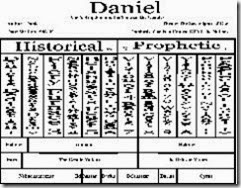
As I read through Daniel during our last week of furlough in California (I finished the reading as we were flying from LAX to Narita airport in Tokyo) I tried to read for the message of the book rather than trying to discern details of the future.Daniel Chart I grew up with the prophet of Daniel (Chapter 5 prompted my “going forward” in a Sunday evening church service in 1965) and visions of strange beasts, weird statues and quests to find the meanings of mysterious numbers. While it is clear that Daniel has some amazing prophecies in it, sometimes the overall message gets obscured in the search for “Left Behind” type details. The purpose of apocalyptic literature is to raise our view to the throne of God and to see, in hard times, that what is going on around us is not the ultimate reality. No matter how bad our situation is here, God is on his throne in heaven and his kingdom plan will be accomplished. He works through and preserves his faithful people now and will reward them in his ultimate kingdom.
One comment of the writer quoted below (and I have often heard in sermons and in my Bible education) is that one should take a passage literally unless it is ridiculous to do so. I would disagree with that. One must always take a passage of scripture literarily. That is we must discern from the context whether the author meant us to take the passage literally or figuratively. So I would tend to go the other way with Apocalyptic literature. In apocalyptic the prophet received truth in the form of visions or dreams with extensive use of symbols and signs. Thus, my default would be “symbolic” here with a literal reading only where the context demanded it. (As it does in the prophecy of the “70 Sevens” which is in a context of Sabbatical years for the land and thus makes sense to interpret in terms of literal years.)

So, the message of Daniel is “Even though Israel and Judah are destroyed and without a king, God will still establish His kingdom. Until then, God's people will be persecuted by the Gentile powers, but God is still in control and will bring glory to Himself by defeating these kingdoms and saving His people.” or “Even though the world, under the domination of Satan's kingdom and is persecuting believers, God's plan is still operating. He will be faithful to deliver His people now and to bring about His Kingdom and destroy the kingdoms of this world.”

All quotes below are from the New American Commentary Daniel by Stephen R. Miller.

Here obedience to Scripture’s divine commands may be observed. This is one reason God blessed Daniel with such great insight. He acted upon the spiritual light he had, and God honored his faithfulness by imparting more... Daniel was polite and tactful. Believers today may disagree with official policies and even with each other, but they should follow Daniel’s example in disagreeing in an agreeable fashion. Daniel 1.8, 67.

Archer rightly comments, “The great existential questions of life and death continue to be insoluble to the worldly wise. Without divine revelation, there is only conjecture and subjective opinion. Only in Yahweh, the God of Scripture, is ultimate truth to be found.” Daniel 2.22, 87.

One other thing that may be happening here is that God is forcing Israel through exile to bring his revealed knowledge and blessings to Gentiles. Israel failed to do this when God gave them power and wealth so he forced them to do it through exile.

There is a God in heaven, and this God may be called upon to supply sustenance and wisdom far beyond what is available from human resources. Although circumstances sometimes may look impossible from an earthly standpoint, there is a God in heaven who can do all things. He can solve seemingly insoluble problems, supply needs, and provide strength for impossible tasks. He is a God who is there and who is able. Daniel 2.28, 89.

Many people are like Nebuchadnezzar today. They know of the true God—many even believe in his miraculous powers—but they never have come to know him in a personal, committed way. Yet such an experience is required; for Jesus himself said, “Now this is eternal life: that they may know you, the only true God, and Jesus Christ, whom you have sent” (John 17:3).  Daniel 2.47, 104.

Although no doubt existed in the minds of Shadrach, Meshach, and Abednego about the ability of their God to deliver them, they humbly accepted the fact that God does not always choose to intervene miraculously in human circumstances, even on behalf of his servants...Although God does not guarantee that his followers will never suffer or experience death, he does promise always to be with them. In times of trial the believer’s attitude should be that of these young men. Daniel 3.17-18, 119-120.

In his pride the king took for himself the glory that rightly belonged to God and invited divine judgment...How ironic that the king who felt himself superior to other men had now sunk to a subhuman level. Daniel 4.31-33, 141–142.

The king of Babylon was no match for the King of the universe. Throughout the book the absolute authority of Israel’s God is set forth. Such is the teaching of Scripture, a teaching that should comfort every believer today who casts a thoughtful glance upon a world in chaos and is tempted to fear. In these times the redeemed of God must look beyond the earthly scene to heaven and remember that God still reigns, and someday he will come and rule directly over the kingdoms of the earth. Daniel 4, 144.

First, as in all of the book, God’s sovereignty is emphasized. Belshazzar foolishly challenged Yahweh’s power, and he was no match for the living God. Second, human beings may go so far in sin (in this case blasphemy) that they bring God’s temporal judgment upon themselves. Third, a lesson concerning God’s faithfulness and the trustworthiness of the Word of God may be discovered, for this chapter records the fulfillment of prophecies predicting the downfall of Babylon. Daniel 5, 169.

The fact that God is in charge is not just abstract information. It requires a response from all creation, especially human beings. Our response to God determines our long term well-being. His faithful people may be persecuted for a short time or evil oppressors may prosper in the short term but in the end, those who live to bring glory to God share in His blessings and those who live for themselves are destroyed by the very thing they put in God’s place.

Miracles are not wrought by God to “show off” but to demonstrate to a lost world that he is the true God and should be honored. Neither was Daniel delivered primarily for his own benefit but so that the Lord could manifest to a lost king and a lost world his reality and power. Daniel 6, 189.

In this story faithfulness is exemplified. Daniel was faithful in old age, in godly example (v. 5), in prayer (v. 10), in trials (v. 16), and in testimony (vv. 16, 20). As a result he was delivered (v. 22), experienced a special manifestation of the presence of the Lord (v. 22), provided an opportunity for witness to unbelievers (vv. 26–27), and was blessed (v. 28). Daniel 6, 190.

God is concerned for his children, and he hears and answers prayer. Sinlessness is not a condition for answered prayer. Daniel was confessing not only the sin of his people but his own sin. Daniel 9.20, 250.

Fasting is a personal matter between the individual and God. It is voluntary. However, if giants of the faith like Moses, David, Esther, Daniel, Paul, and Jesus himself felt the need to fast, it would seem reasonable that modern saints should be willing to deny themselves in order to pray more earnestly for the furtherance of the kingdom of God in a world that lies in deep spiritual darkness. Daniel 10.3, 279.

One of the purposes of Daniel is to show how a believer responds during the Times of the Gentiles when the progress of the Kingdom of God is not apparent: Faithful, Active, Prayerful, Waiting!

The chapter continues the theme of the sovereignty of God. In spite of opposition from Belshazzar or the despicable ruler described in this chapter, God is still in control. Someday the court will sit, Christ will reign, and the saints will rule with him. Daniel 7, 217.

The satanically inspired king was endeavoring to rid the world of the Word of God as tyrants have attempted to do many times since. But as Jehoiakim discovered, one who tries to destroy the truth of God will find that he has only destroyed himself (Jer 36:20–31; cf. Dan 8:25). Daniel 8.25, 228.

The message of Dan 8 concerns a distant time and place, but it illustrates pertinent truths for today. For example, God’s omniscience is set forth; he knows the future. Believers are also warned that at times they may be called upon to endure suffering, even martyrdom, for the Lord. Daniel 8, 237.

All those who misuse God’s people or creation for their own benefit should be aware that they will pay for that. All those who are persecuted or suffer in this age for their commitment to God’s kingdom should be confident that they will share in his eternal blessing and rule.

Regardless of disagreement over dates and some matters of interpretation, certain facts seem clear. The passage predicts the coming of the Messiah—Jesus of Nazareth. Messiah will die, and subsequently the city of Jerusalem and the temple will be destroyed. At the end of the age an evil ruler will arise who will persecute God’s people, but his wicked activities will not continue, for the same Messiah who died will come again. He will judge the Antichrist and all those who follow him. Daniel 9, 273.

In this passage humanity is afforded a glimpse of the behind-the-scenes activity that took place in the Persian government. Cyrus released the Jews, but unknown to the Persian monarch angelic forces played a part in this decision. Satan and his demons had been bound so that the will of God would be accomplished. Daniel 11.1, 290.

First, the reality of the God of the Bible is demonstrated. Campbell relates: “In the first 35 verses there are at least 135 prophecies which have been literally fulfilled and can be corroborated by a study of the history of the period.” ... Therefore this section of the Book of Daniel is not an unimportant record of historical events but a rich testimony to the believers’ glorious God and the trustworthiness of his Word. Daniel 11, 312–313.

Baldwin seems correct in stating: “The reason for using ‘sleep’ here as a metaphor for ‘die’ is that sleep is a temporary state from which we normally awake, and so the reader is prepared for the thought of resurrection.” Daniel 12.2, 316.

This “consolation of hope” belongs to all who have received Jesus Christ as Lord and Savior. May every person who reads these words be part of that great host of the redeemed who “will shine like the brightness of the heavens” and “like the stars for ever and ever!”  Daniel 12.13, 327.

The fulfilled prophecies of Daniel in regard to the evil empires of his day give us confidence that God will remove the oppressors of our day. The fact that he was able to keep his kingdom plan going despite the failings of Israel encourage us that he will keep his plan going through the church. Our response to bad situations should be the same as Daniel’s 3 friends,”We know God is able to deliver us, but even if we face death in this instance we will still trust him.” Hang in there, your reward is coming!

Wednesday, August 13, 2014

Ministry at Hessel Church

As I mentioned in my last post, our last church presentation of this trip was at Hessel Church in Sebastopol California. Hessel Church was founded by Joyce’s uncle Ron and is now pastored by her cousin Rich Cundall (left). From the picture here you can clearly see the family resemblance, although Joyce did not get the “tall gene.” Joyce and I were interviewed by fellow Biola alum Pastor Andy Sodestrom in both services and spoke in a small group on Sunday, and then at the men’s prayer breakfast on Tuesday. It was such an encouragement to see SAMSUNG            people there who know about the ministry at PIU and are so supportive of what God is doing in Micronesia. It is a bonus that we get to see family there too. So now we are packing to head back to Guam tomorrow. The new school year is about to start.