I am continuing to read through the commentary series The Bible Speaks Today,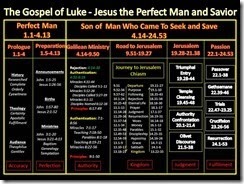 edited by John Stott, and post quotes from my NT reading 3 times per week on my Facebook page. In December I have been reading through the Gospel of Luke, accompanied by the third volume in the series, The Message of Luke: The Saviour of the World, by Michael Wilcock (as always his quotes are in blue font below). Luke is the Gospel that proclaims Jesus, the promised Messiah of Israel, who was the perfect Son of God who became the perfect Son of Man to provide the way for all people (especially the powerless, the outcast, the sinner) to enter God’s kingdom and to show us how a man should live.
Wilcock sees the theme of Luke’s Gospel in its universal message…
This universalism should not be understood to mean that God will save every single individual of the human race, even those who willfully reject him; such a doctrine runs counter to the basic teaching of the New Testament. Rather, it means that there is no kind of person the gospel cannot reach, no boundary it cannot cross. Luke is saying not that everyone will be saved, but that anyone can be saved. 17-18
The introduction to the gospel shows that the apostles’ teachings about who Jesus was and what he had done (Gospel) had been carefully investigated by Luke and was solidly based in history. Luke interviewed eyewitnesses to insure the reality of what was being taught about Jesus. 1.1-4
Read what I have written, he (Luke) says, and you will see the facts on which Christianity is based; and you will find there something firm and solid and absolutely trustworthy, a sure foundation for faith. 31
Jesus’ early life showed His character and conduct as the perfect Son of Man and Savior. (1:5-4:13) The birth stories of John and Jesus highlighted the great significance of John's role to announce the coming of the Savior of the world, and Jesus' who would be the virgin born perfect man, the Son of God and Spirit powered Messiah-King who fulfilled David’s Covenant. Mary, Elizabeth, and Zacharias' speeches are humbly thankful for their parts in fulfilling God’s plan. 1:5-56
We must believe, as clear-thinking Christians in every age have believed, that it is the will and plan of God for all wrong relationships, political as well as spirituals eventually to be put right. We include therefore in our preaching of salvation the need for the righting of wrong social structures and physical conditions. But we keep at its centre the need for the cleansing of sinful human hearts. That is the primary concern of the people of God. Luke 1.57-80, 38.
Angels, predictions, miracles, are an intrinsic part of the gospel, because it concerns a supernatural break-in to our world, as unexpected as the message to Zechariah and as staggering as the one to Mary. For such supernaturalism we must be prepared: Christianity is meaningless without it. The Jewishness of the tale is likewise intrinsic to it, because at no other place or time has God ever broken into our world with the full message of salvation, but in these events in first-century Palestine. Luke 1, 40.
Jesus’ unusual birth and development show that God has sent a special man (the God-Man) to be the Savior of the world. (2:1-52) His baptism announces his unique mission and status as fully God (baptism) and fully man (genealogy) so we need to repent and join His kingdom. (3) In the temptation, Jesus the God-Man gained the victory over sin and Satan that the first man lost. (4:1-13)
Luke has told us in the angel’s words who Jesus is, and in the prophet’s words who may benefit from his message; and now in the words of the Child himself, we learn that to grasp the fullness of this message of salvation we shall need to follow the one who already knows God as his Father, as he prosecutes his Father’s plan through the whole gospel story in order to bring us into the same relationship. Luke 2, 50.
All this is focused in Jesus. Through him is to be done God’s saving work, for to him is given God’s authority, and he is himself God come in the flesh: Jesus, the Christ, the Lord. In him, and nowhere else, is salvation to be found. Can we have enough of him, or say enough of him? Shall we not rather, once we have grasped what the angel is telling us about him, follow the shepherds in seeking him with all haste and then making known the wonderful news? Luke 2.1-21, 47.
There is none to whom the message of the gospel is not directed. Luke, having concentrated this great gift of God in the Lord Jesus Christ alone, now extends it to the whole human race, and to each person in particular, and requires men to ask themselves whether they have yet accepted it or are still rejecting it. , Luke 2.24-35 48.
Luke’s God is a God who speaks. He has broken into a world which, for all the babel of its myriad voices, is perishing for lack of a life-giving voice from heaven, and he tells us the good news of salvation; and this salvation is in his Son. The same God speaks today, on the same subject, to meet the same need. Luke 3,54.
God’s own declaration concerning Jesus: ‘Now this one is my beloved Son; with him I am well pleased.’ Jesus, unlike the rest, is acceptable to God. Like no other, he is from the start in a true relationship to God. He is, in a distinctive sense, the Son of God. God says so. Luke 3.21-22, 56.
(Jesus)is man as God meant man to be, the image of God, showing the family likeness in perfection. We may picture our present human existence as a pit, in which all of us are trapped, for the sin of Adam has removed any possibility of our climbing out into the upper world. Jesus is like us, in that he has come down into the same pit with us. That is the message both of the baptism story and of the family tree, if we leave out their closing verses. But he is unlike us, in that while we are here because of a fall in disobedience, he is here because of a descent in obedience, and he has never let go of the rope which joins him to the world above. He is firmly anchored up there, in the unbroken relation of sonship with his Father. Luke 3.23-38, 58.
The answers of Jesus are in effect as follows. ‘You suggest that feeding my body may take precedence over obeying my God. But God has told men’—men—‘that they shall not live by bread alone; therefore I shall not do so. You offer me universal power, at the price of worshipping you. But God has told men that they are not to worship any but him; therefore I shall not worship you. You propose that I should test his promises to suit my own convenience. But he has told men that they are not to test him in this way; therefore I shall not do so.’ Luke 4.1-13, 59.
The perfect righteousness of the new Man can be extended to every other man, however sinful, who will receive it in repentance and faith. He does not need to be a Jew; he does not need to belong to the same tribe, or the same culture, or even the same century, as Jesus; he does not need to be religious or clever or influential. The mere fact that he is a sinful man means that Jesus came to save him, and to make him also a son of God. Luke 4.14-30, 62.
Jesus has Spirit-powered authority to which we must respond by becoming His disciples. Even so when he began his ministry Jesus was rejected by Israel as whole and would turn to faithful Israel and to the Gentiles and call them to follow him. His miracles show that He is the perfect Son of Man with authority to call these disciples.4:14-6:16
Many would have to admit that it is at this point that the word of Jesus comes home to them—literally, because it invades the privacy of their own workaday life, instead of staying respectably in a Sunday church service where it belongs. To learn from Jesus that they should be acknowledging his Father’s daily gifts of sun and rain, food and clothing, life and breath; his own lordship over all creation; and his Holy Spirit’s work of sanctifying every part of their being,—this is a new and convicting thought, and perhaps the beginning of the gospel’s effective entrance into their hearts. Luke 5.1-11, 69.
But one of the great key words of the gospel is ‘reconciliation’; and as we are reconciled to God, so we are reconciled among ourselves, and the church whose members are no longer ‘lepers’ to one another, but united in fellowship and love, is a most powerful testimony to the power of the living God. Luke 5.12-14, 70
The gospel is still ‘the power of God for salvation to every one who has faith’, and we therefore have in our own hands the very thing which can cure these sin-sick souls, the ‘balm in Gilead’ which makes the sinner whole. With our experience of the remedy comes the confidence that it will work for them also; and with our possession of it comes the responsibility to make it available to them. Luke 5.27-31, 73
My word, says Jesus, is meant as a total replacement, not as a source of useful patches...If you are prepared to receive the new wine of Jesus’s message in its fullness, the brittle wineskins of your old beliefs will not be able to hold it. You must expect to forfeit them altogether. Luke 5.33-39, 73–74
Jesus calls his disciples to a life based on inner transformation which leads to righteous action. 6:17-49
If there is one thing more than another which this chapter stresses, it is the distinctiveness of the people of God. They are meant to be clearly different from the world around them. And the mark which distinguishes them as members of the church is their acceptance of the leadership God has given them. They give their allegiance first to Jesus, then to the apostles to whom Jesus bequeaths his authority. Luke 6.12-49, 83–84.
Chapter 6 thus shows us the new sabbath of peace with God, the new apostolic community of the church, and the new way of life for the Christian. Each one replaces a spoilt version of itself by going back to the original. Each one is a preview of the splendid reality which will be seen in its fullness only in the next world. But although we cannot hope to see that fullness in this world, there is no evading the challenge that Jesus expects us to get as near to it as we can—daily rejoicing in our Father, loving towards our brethren, and holy within ourselves. Luke 6.12-49, 86–87.
Jesus’ miracles and teachings show him to be the Son of Man and Savior of the world. (7:1-8:56) and validates his call to all people to the count the cost and follow His hard path to the kingdom. (9:1-50)
The good news..brings salvation not only into the realm of disease but into that of death itself...If today’s preachers of the good news follow the example of Luke, they too will not be content with mere analysis or comment. They will be proclaiming as a fact that the power of that kingdom really does get to grips with these basic evils, and in each case ushers in the opposite good. They will be remembering, as they do so, cases known to them where this power is joyously at work, if not in identical ways yet certainly in equivalent ways. And they will be expecting equivalent results from their preaching. Luke 7.1-17, 90-91.
The news of the kingdom is always new, unexpected, upsetting. It will not fit in with men’s preconceived ideas, nor pander to their prejudices. It digs far deeper than their shallow understanding of the evils of Satan’s kingdom, and soars far higher than their low view of the glories of God’s kingdom. Luke 7.28-35, 92.
But what is noteworthy in all three incidents is that each describes a need which God alone can meet; and when we think of the people concerned, we realize that their ‘poverty’ consists precisely in this—that in the eyes of Jesus’s contemporaries such people have no resources to meet those needs, because they have no claim on God: the centurion is a mere Gentile, the widow a mere female, the woman at the party a mere sinner. They are outside the circle of privilege. For God to help them at all they have to receive his help gratis. Luke 7-8, 93.
The subject of the good news is the kingly rule of God in Jesus Christ, a rule which will bring untold blessings to those who are ready to receive it. But they must be ready. The good news is for the poor—for those who recognize their poverty, their need. They must give up their own ideas on how to cope with their problems, and accept the answer which the good news brings to them—abide by if and live on it. Luke 8.1-21, 95.
The man who accepts Christ imagining that from then onwards trouble will no longer come his way is heading for disaster. For it is sure to come; and when it does, he will be pitched into doubt or even despair. No, Jesus does not promise a trouble-free life. It is not that tribulation may come, nor even that it will come, but that it must come. Luke 8.22-56, 100
The miracle which the church of Jesus Christ should both embody and proclaim is the power to cope with the evils of life. The disciples of Christ are neither free from tribulation, nor helpless in tribulation, but victorious over tribulation. Luke 8.22-56, 103–104.
The feeding of the five thousand is only one miracle among many, but it is obviously of the greatest importance (the only miracle related in all four Gospels), and leaves the church in no doubt of its responsibility to care for its own members; even after the crowd has been fed, there remain twelve baskets full, ‘one from each apostle, symbolizing perhaps the continuing miraculous sustenance of the new Israel of God’. Luke 9:10–17, 108.
(Jesus) is the Prophet who is to be heard and heeded: that is why the church, if it is to carry on his work, is to be a preaching church. He is the royal Son, who with his wealth and power provides for all the needs of his people: that is why his church must exercise the same ministry and be a community in which members are likewise concerned with one another’s needs, caring and nourishing and building up. He is the Chosen, the Servant, who treads the path of suffering: that is why all those who wish to be his disciples must similarly take up the cross and deny themselves. Luke 9.1-36, 110.
The way to sharpen one’s wits is to use them. Christians who understand are those who have not been content with going through the motions of Christian discipleship, but who have applied themselves to asking and listening and thinking. Luke 9.37-45, 112.
When we have admitted how little we, like the disciples, have really grasped about him and about ourselves, we shall appreciate all the more his forbearance and love in giving us repeated opportunities for learning more of his Word, and make the fullest use of what he gives us. Luke 9.49-50, 114.
Regularly God tests the earnestness of men’s hearts by bringing them to this fork in the road. When it becomes necessary to choose between two ways, which do we follow? Comfort or convention or custom—or Christ? The test from the very outset (see, for example, 5:27) has been ‘Follow me’. Luke 9.57-62, 119.
To share in the kingdom of the Son of Man a disciple must be a committed follower in the face of growing opposition and persecution. (9:51-19:27) The principle that drives the whole section is stated in 9:52-62: A disciple of the Son of Man must be willing to give up all to follow Him. Jesus is available to all who seek him but rejects those who reject Him. 10:1-11:54
Their power to exorcize demons is only in the name of Jesus; and he makes this quite explicit—‘I have given you authority.' He is making them into messengers who can proclaim his message effectively. It is much less important that they should rush out doing the things they believe he wants, than that they should let him make of them the kind of people who inevitably will do such things. Luke 10:17–24, 121.
The way of Jesus is one of devotion and dedication, both in following him and in heralding him. But the way is not, on that account, a matter of assiduous ‘religion’ and frenzied service, of busy-ness and incessant good works. It means not achievement, but commitment; not activities, but attitudes; not quantity, but quality... When Jesus expects us to follow him all the way, he means not a frenzy of religious activity undertaken in our own strength, but the total abandonment of ourselves to him, for him to work in us both to will and to work for his good pleasure. Luke 10.25-37, 123–124.
The basis of prayer, or God’s part in it, is the subject of the sayings about the father who naturally will not give his son a serpent or a scorpion if the boy has asked for a fish or an egg. At the receiving end of our importunate prayer is a Father who does not need to be importuned, but is only too eager to give the best of answers. Luke 11.1-13, 126.
Salvation, then, means more than reformation; it means revolution. Nature abhors a vacuum. Not only must the strong man (Satan and evil) be overcome; the stronger man (Jesus) must have total victory and take possession of the palace. Luke 11.17-28, 129.
At Pentecost the age of the Holy Spirit began. Ever since then he has been offering salvation to men—the revolution in which the rule of evil is ousted by the rule of God. That is what he, the ‘finger of God’, does. And this salvation is located in Jesus, and in him only. He is the Saviour. It is to him that the ‘finger of God’ points. Luke 11.29-32, 130.
Jesus’ then warns his disciples about 4 things that will kill faith and commitment: Hypocrisy, fear, greed and worry and the need to replace them with honest confession, fear of God, generosity, and childlike trust in their loving father. (12.1-34). Then they will be ready for the coming judgment and kingdom banquet (12.35-59)
The Spirit comes to revolutionize their lives, offering salvation in the person of the Saviour Jesus; let them not refuse. He comes to transform their lives into the image of Jesus; let them not refuse that either—for refusal is the blasphemy against the Spirit, and can never be forgiven. Luke 12.1-12, 132.
The possessions of this life belong to this life; and since this life is less important than the next, the things of this life should be valued less than the things of eternity...The keen eye of Jesus is dividing between those who are taken up with the needs of the immediate future and the things of this life, and those who see that the ultimate future is far more important and are chiefly concerned to provide for the next life. Luke 12.13-34, 135–136.
It is upon spiritual responsibility that Jesus’s searchlight of judgment is now turned. The more you have, the greater your prospect of honour—and the greater your peril. Luke 12.35-48, 136
Jesus distinguishes between those who will not see his crucial place at the centre of human life and history, and those who as his disciples are beginning to glimpse, however dimly, the meaning of it all. Luke 12.49-59, 137.


